
Bill Campbell's Trillion-Dollar Leadership Playbook
🚫 Text-to-speech is not supported in your browser. Please try a modern browser like Chrome, Firefox, or Safari.
When we think of Silicon Valley success stories, we usually picture visionary coders, groundbreaking algorithms, or charismatic founders. We rarely picture a former college football coach from a Pennsylvania steel town who didn’t move to California until his early 40s.
Yet Bill Campbell, the mentor behind Steve Jobs, Larry Page, Sergey Brin, Eric Schmidt, Sundar Pichai, Sheryl Sandberg, and Brad Smith, helped create more economic value and leadership potential than perhaps anyone else in tech history.
In Trillion Dollar Coach: The Leadership Playbook of Silicon Valley’s Bill Campbell, authors Eric Schmidt, Jonathan Rosenberg, and Alan Eagle open-source the quiet genius that guided Apple from near bankruptcy to a trillion-dollar valuation and helped Google grow from a chaotic startup into a global powerhouse.
Here is a breakdown of Bill Campbell’s framework, with practical meeting structures, team decision-making models, and a slide summary.
Slide Summary
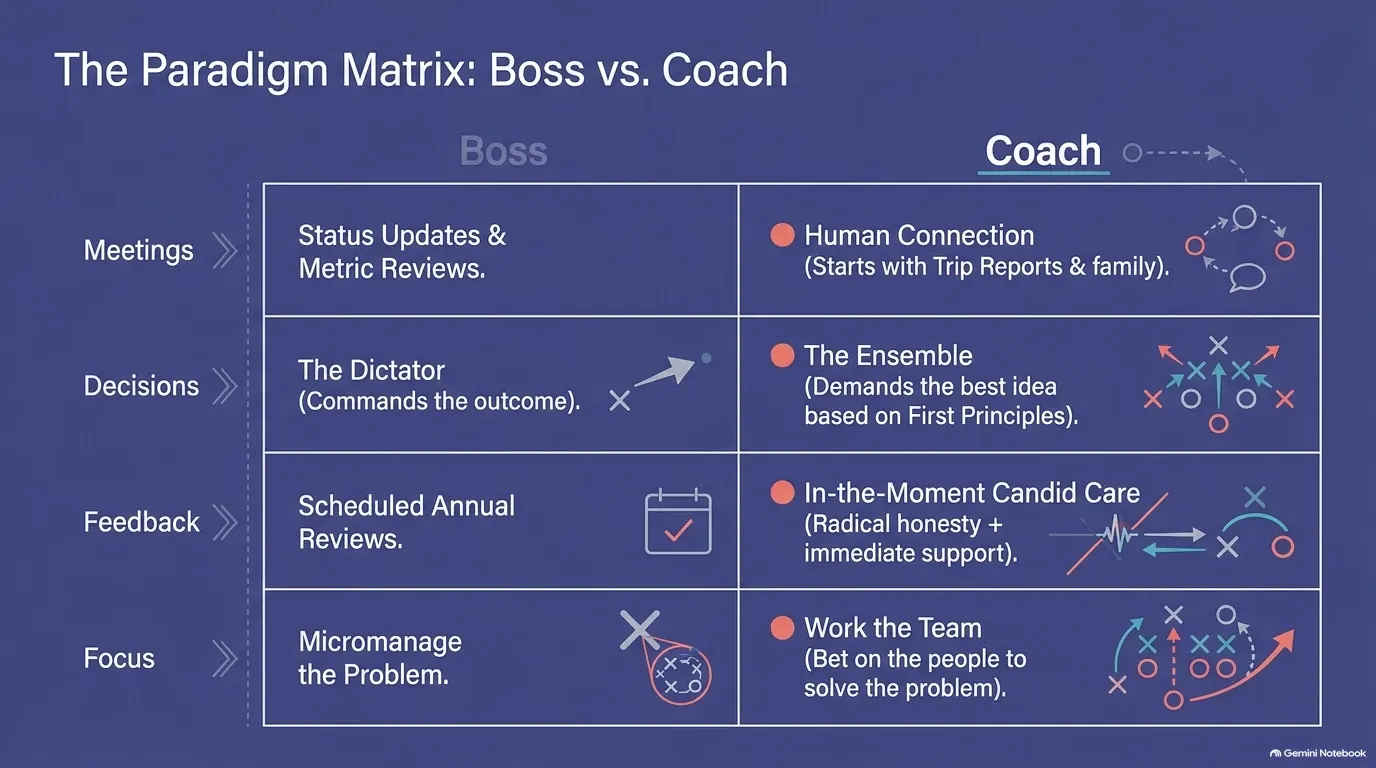
Boss vs. Coach
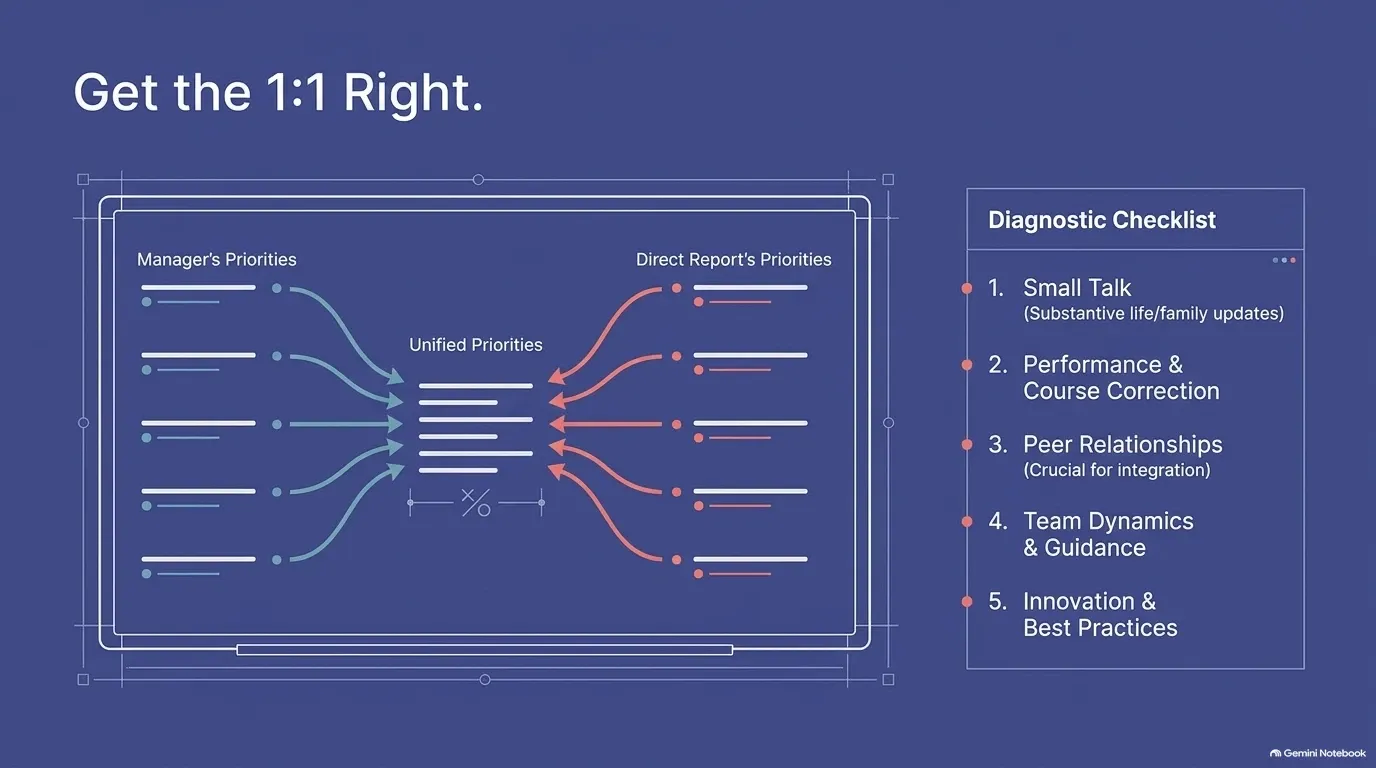
Get the 1:1 Right
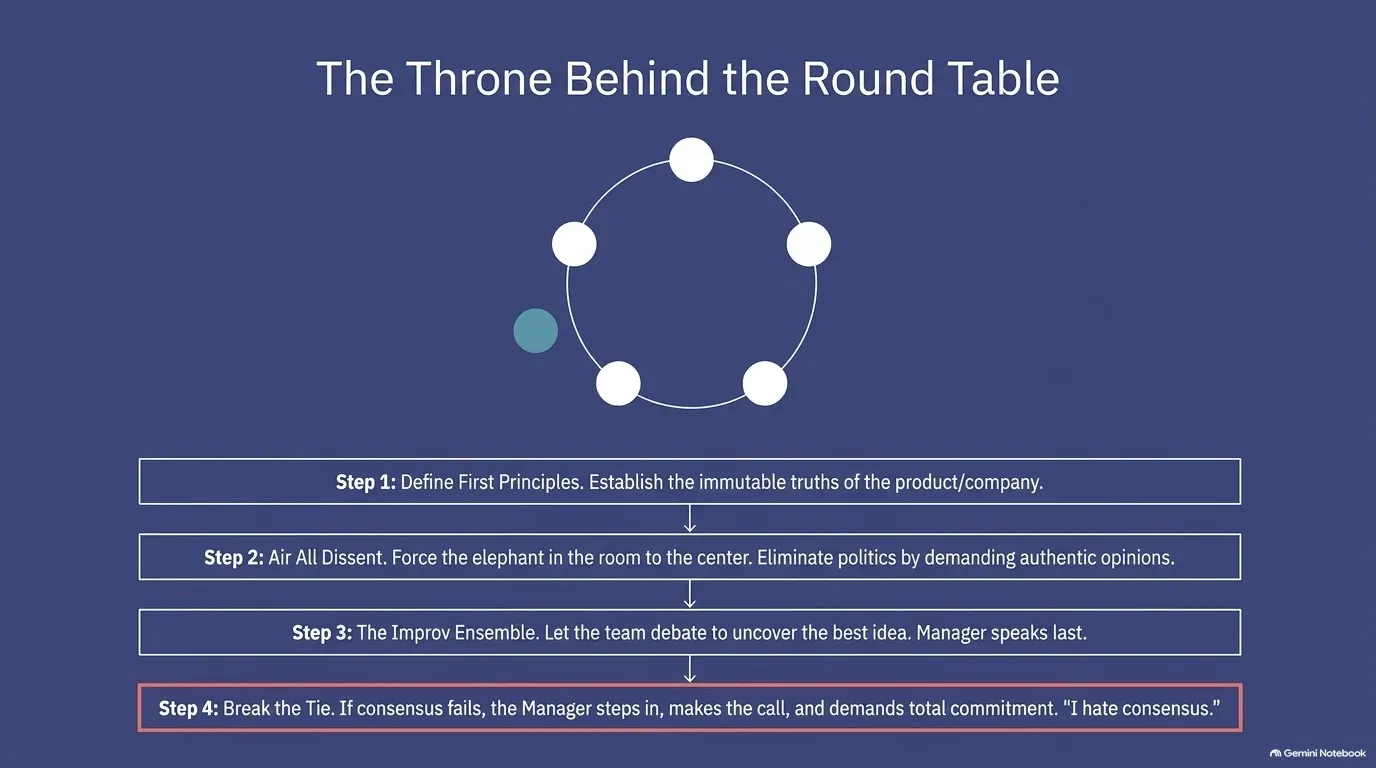
The Throne Behind the Round Table
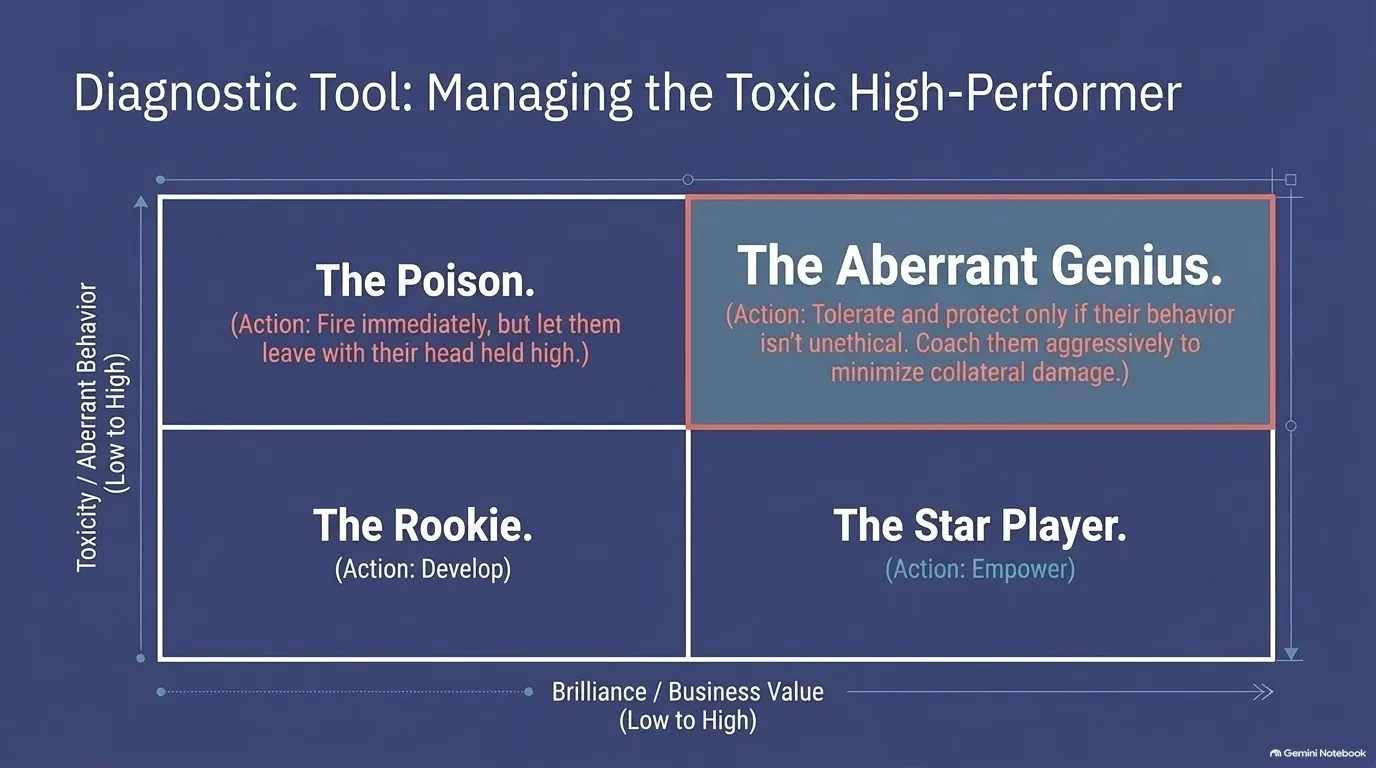
Managing the Toxic High-Performer
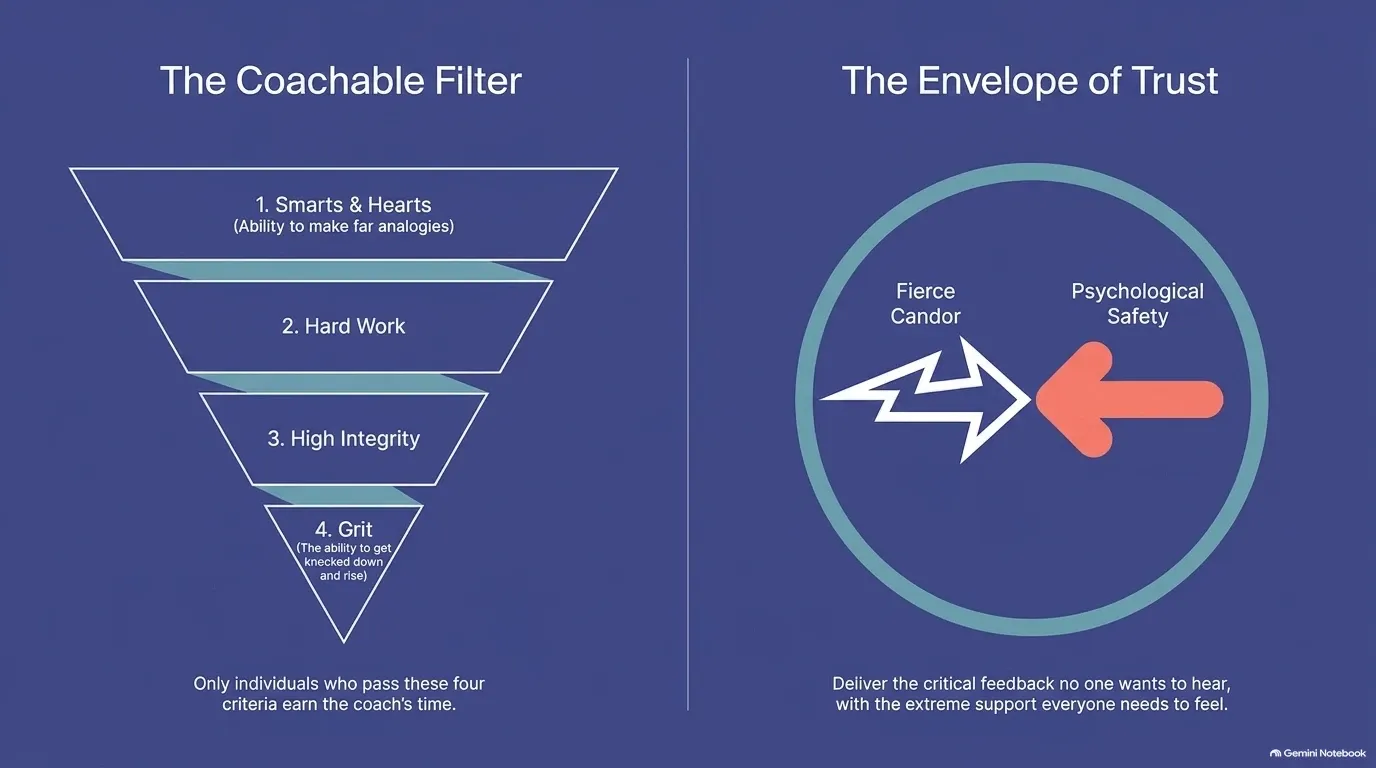
The Coachable Filter and the Envelope of Trust
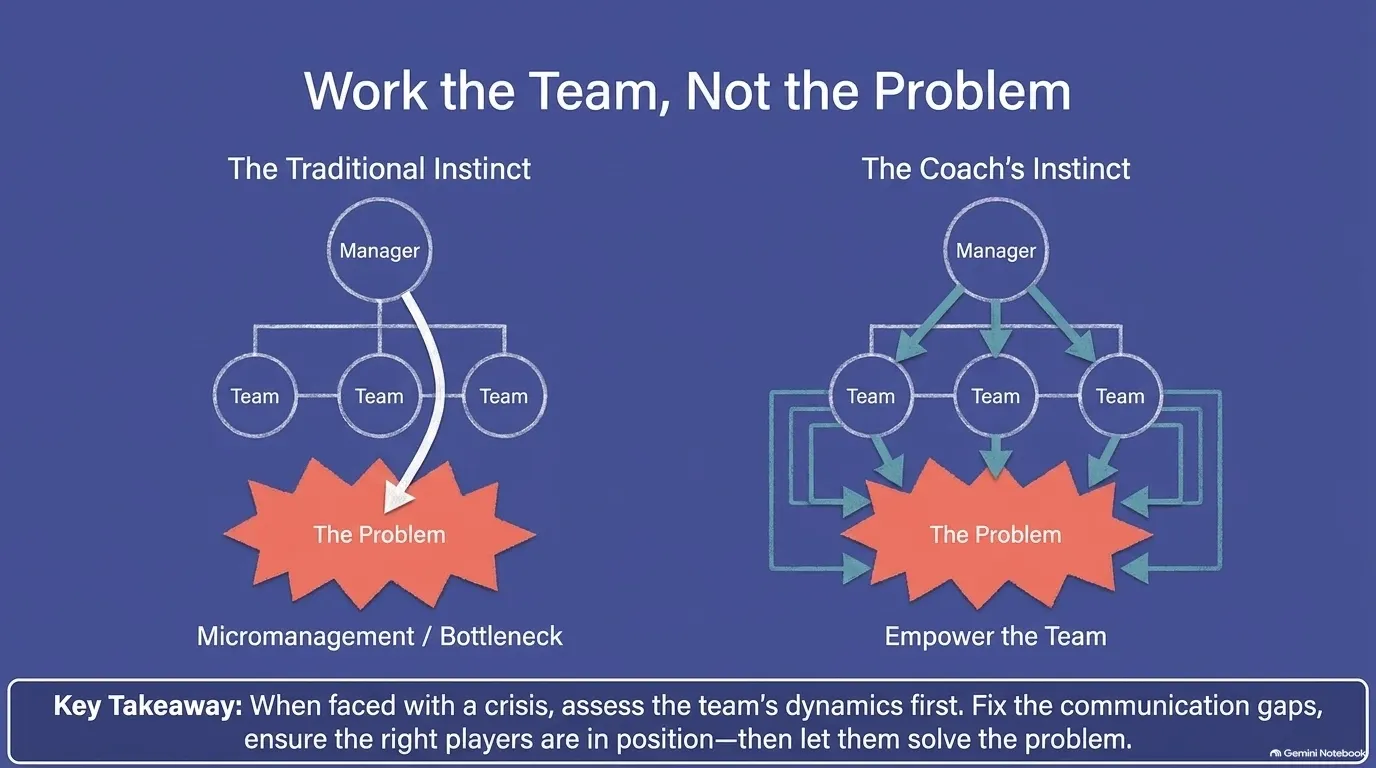
Work the Team, Not the Problem
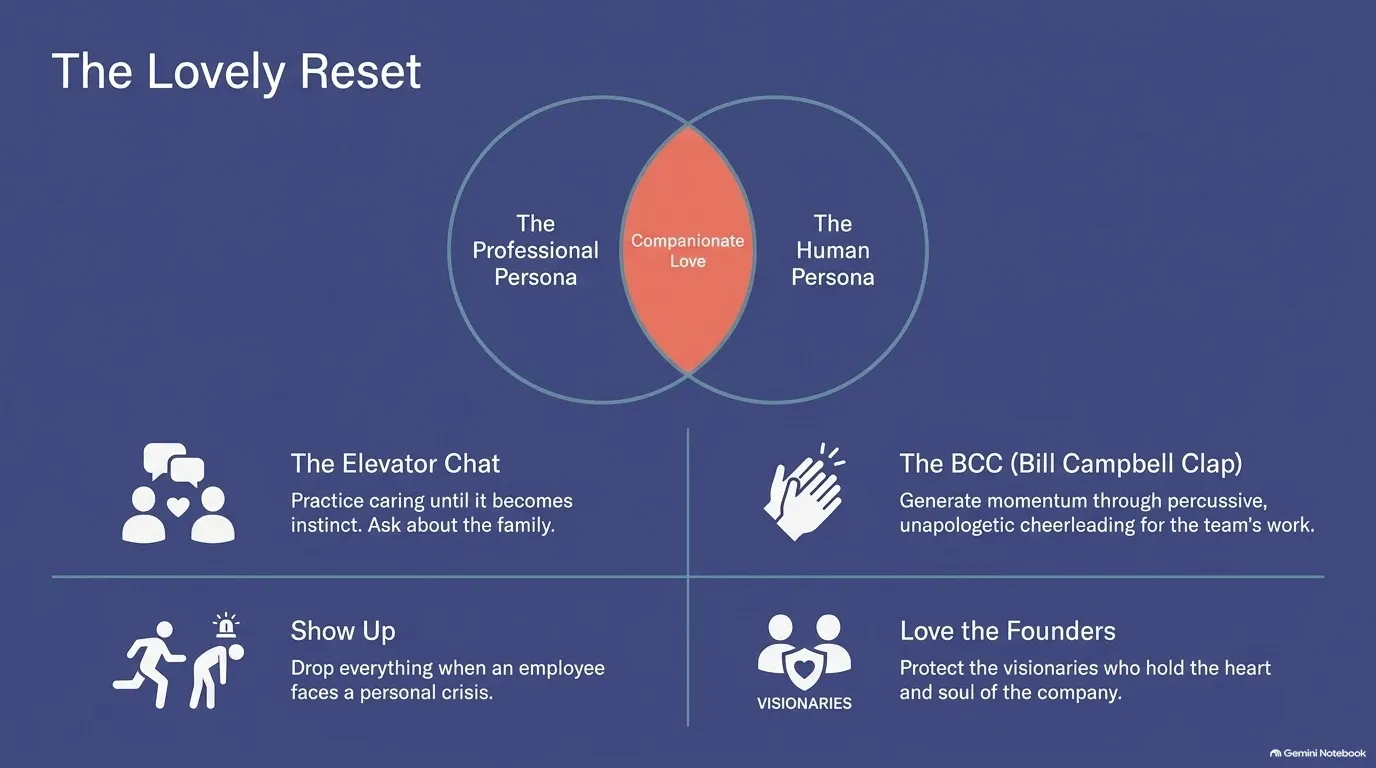
The Lovely Reset
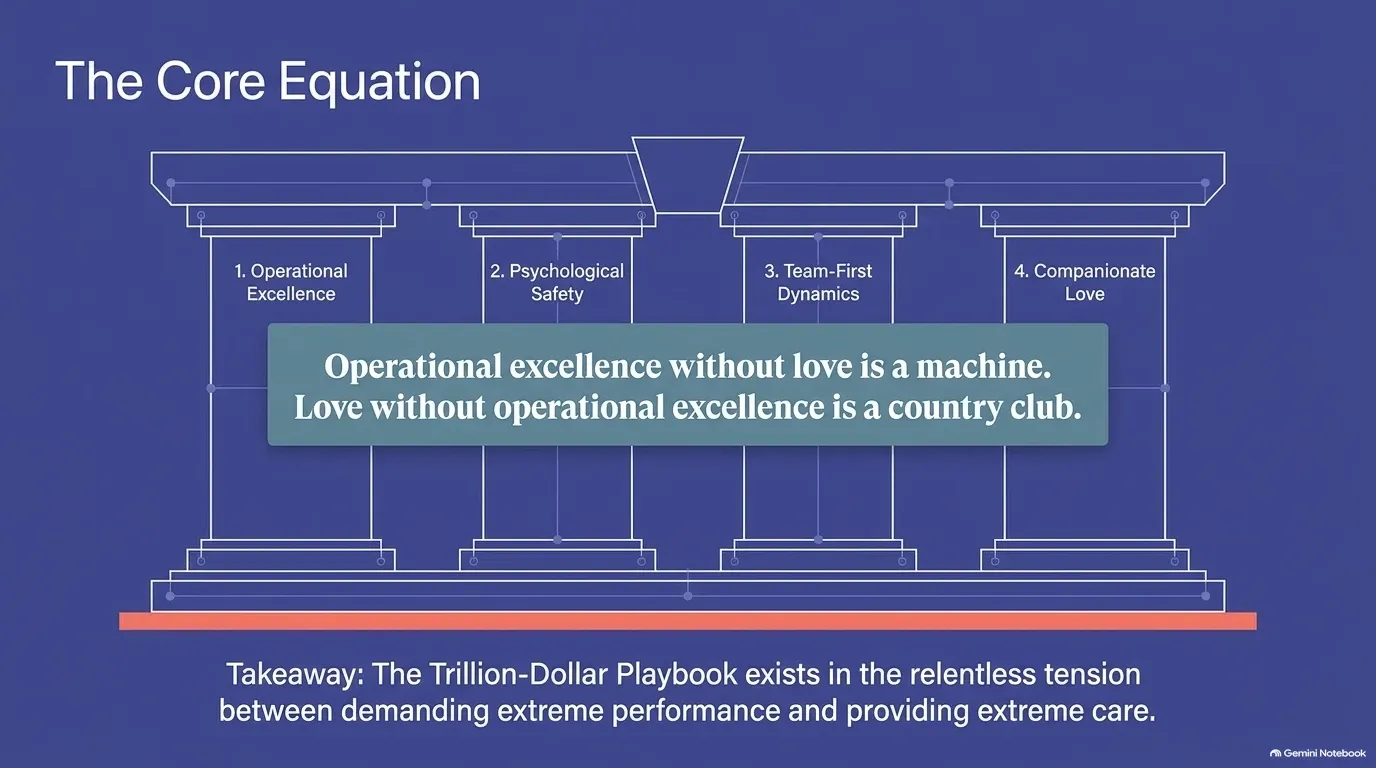
The Core Equation
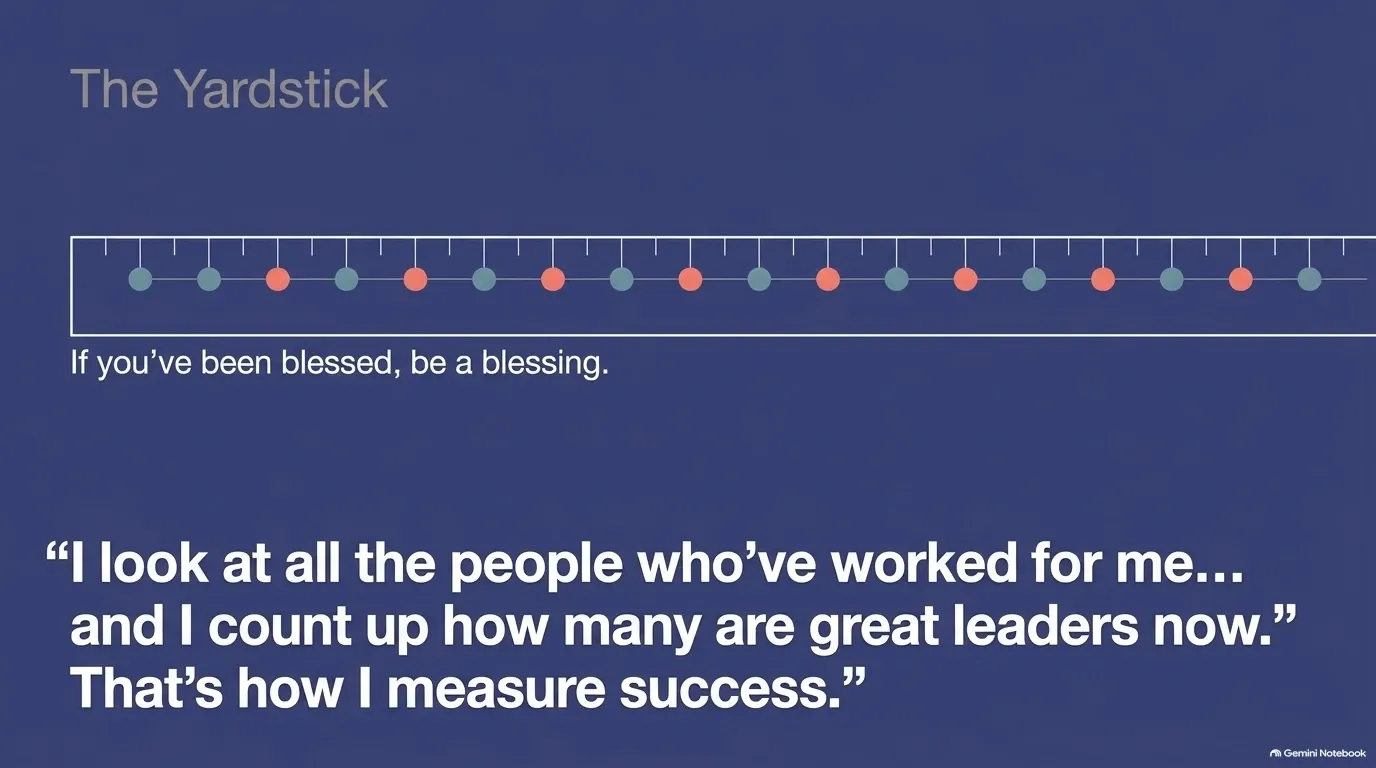
The Yardstick
Scroll or swipe sideways to see every slide →
Pillar 1: Management & Operational Excellence
Many modern leadership books skip operational details in favor of high-minded inspiration. Bill Campbell took the exact opposite approach: leadership is earned through operational rigor.
1. “It’s the People” Manifesto
Bill believed that people are the primary foundation of any organization’s success. A manager’s top priority isn’t managing budgets or strategies. It is the well-being and growth of their team.
Managers create this high-performing environment through three pillars:
- Support: Giving people the tools, info, training, and coaching to succeed.
- Respect: Understanding career goals and honoring personal life choices.
- Trust: Freeing people to make decisions and excel.
2. Operational Rituals That Build Culture
- Start with Trip Reports: Begin staff meetings with personal updates, weekend stories, or trip reports. This “socioemotional communication” builds empathy, rapport, and psychological safety before diving into heated business choices.
- First Principles Decision-Making: When opinions clash, ground debates in immutable truths (“first principles”) that everyone already agrees on.
- “The Throne Behind the Round Table”: Managers should run an open decision-making process where all dissenting perspectives are heard. Avoid consensus-driven groupthink. If the team cannot reach alignment, the manager must break ties decisively.
Pillar 2: Building an Envelope of Trust
Trust was Bill’s superpower. He created an “envelope of trust” that allowed leaders to be vulnerable, candid, and courageous.
Pillar 3: Team First
When faced with a crisis or strategic milestone, most executives ask: “What is the problem and how do we solve it?”
Bill’s instinct was always to work the team first, then the problem:
- Faced with a challenge, start with the team, not the problem.
- Check the team: Is the right team in place and properly aligned? Do they have trust, grit, and psychological safety?
- Solve the problem together once the team is ready.
Key Team-Building Rules
- Solve the Elephant in the Room: Bring hidden tensions and politically charged issues directly to the center table immediately.
- Pair People Up: Assign cross-functional tasks to peer pairs who don’t usually collaborate to build trust across organizational silos.
- Get Women to the Table: Bill recognized that the highest-performing teams have greater cognitive diversity and include more women.
- Manage Aberrant Geniuses: Protect high-performing but difficult team members as long as they are non-abusive, ethical, and their contribution outweighs their management toll.
Pillar 4: The Power of Love
Perhaps the most surprising word that appears throughout Trillion Dollar Coach is love. Bill broke down the wall between professional and human personas, bringing warmth, “companionate love,” and genuine care into the executive suite.
- The “Lovely Reset”: Ask about families, personal lives, and well-being. Show up in person when team members face illness, tragedy, or personal difficulty.
- The Percussive Clap: Cheer demonstrably for team members’ successes.
- Build Communities: Invest in social capital inside and outside work, whether through team dinners, informal gatherings, or shared rituals.
- Love the Founders: Protect and honor the visionaries who hold the heart, soul, and long-term passion for the company’s mission.
Practical Template: Bill’s 1:1 Meeting Framework
Bill believed the 1:1 meeting is the single most important tool for a manager to develop their people. Here is his standard 5-part framework:
1. (Not So) Small Talk & Relationship Check-in
   - Family, weekend, personal well-being, and mutual rapport.

2. Performance on Job Requirements
   - Key delivery milestones, sales/product metrics, budget, and customer feedback.

3. Relationship with Peer Groups
   - Cross-functional alignment (Product & Eng, Marketing & Sales, Finance & Ops).

4. Management & Leadership Coaching
   - Are you guiding your team? Hiring the right players? Weeding out bad fits?

5. Innovation & Continuous Improvement
   - Are you evaluating new technologies? Pushing the boundary of best practices?